Monday, November 15, 2010

Middle/Heroic Period: 1800-1810

Ludwig van Beethoven, 1803, by Christian Hornemann
Portrait courtesy of timelines.com

12 December, 1810

Alas! Lament with me, my dear friends, for the great Beethoven is deaf! I have lost my entire sense of hearing . . . how, as a musician am I to go on living life? Fate has been cruel to me. Likewise, I shall be cruel to Fate itself! "I shall seize Fate by the throat; it shall certainly not bend and crush me completely!" I will live on. I will continue my life. I will live my life just as if I had not become deaf. I will be the world's greatest deaf composer.

I had first begun to notice something wrong with my ears as early as the year 1795. I could barely hear the harshest of noises, and the buzz in my ear was constant. Soft and low tones became unintelligible, and loud sounds became distorted. By 1801, I became completely deaf. In a few letters I wrote to my closest confidant, Karl Ameda, "How often I wish you were here, for your Beethoven is having a miserable life, at odds with nature and its Creator, abusing the latter for leaving his creatures vulnerable to the slightest accident ... My greatest faculty, my hearing, is greatly deteriorated." Ameda was most sympathetic towards me and my plight. But spilling out my most horrifying secret to one friend was not enough. I also wrote to Wegeler, saying "How can I, a musician, say to people "I am deaf!" I shall, if I can, defy this fate, even though there will be times when I shall be the unhappiest of God's creatures ... I live only in music ... frequently working on three or four pieces simultaneously." Whilst writing these letters, I comtemplated suicide . . . I thought about erasing the remnants of my life for being not able to hear was almost too much for me to bear. But I threw that thought away as soon as I had conjured it. For how could the world bear to lose their great Beethoven just because of something as simple as deafness? What horrors would the world face without my music? How could the world bear to go on without me? Thus, I decided to remain a living, and deaf, composer.

Perhaps God himself has sent me this deafness to challenge me. To see if I am worthy of being His musician. Well I am ready for this challenge. I will face it head on, and I will conquer it. My life has become a challenge worth fighting for, as I have written to Wegeler: "Free me of only half this affliction and I shall be a complete, mature man. You must think of me as being as happy as it is possible to be on this earth - not unhappy. No! I cannot endure it. I will seize Fate by the throat. It will not wholly conquer me! Oh, how beautiful it is to live - and live a thousand times over!"

Unable to keep all this grief and anger bottled up inside me, I penned out my feelings in my Heiligenstadt Testament on October 6, 1802. Here, I wrote "If at times I tried to forget all this, oh how harshly I was flung back by the doubly sad experience of my bad hearing. Yet it was impossible for me to say to people, "Speak louder, shout, for I m deaf." Ah, how could I possibly admit an infirmity in the one sense which ought to be more perfect in me than others, a sense which I once possessed in the highest perfection, a perfection such as few in my profession enjoy or ever have enjoyed --- Oh i cannot do it."

Although I wrote several pages of this Heiligenstadt Testament, I hid it and did not show a single soul what I had written. Only after my death, along with my will, will this paper be shown to and read by the world.

The Heiligenstadt Testament
Picture courtesy of timelines.com


Last page of Heiligenstadt Testament
Picture courtesy of lvbeethoven.com

Despite my illness, I continued to compose throughout my life until my death. One composition that I will never forget, is my Symphony No. 3, more commonly known as the Eroica Symphony. I had written this piece with Napolean as it's dedication in mind. Oh how excited I was to hear of Napolean's great accomplishments! I had thought he was a God-send, ready to revolutionize the whole of Europe! I had admired him to the point of worshipping him, only then did he disappoint me the most. After Napolean crowned himself emperor on December 2, 1804, I was so furious, my head so clouded with rage that I grabbed the nearest blade I could find and plunged it into my own manuscript: Sinfonie in E-Flat Major. Crossing out Napolean's name, I renamed my piece: composta per festiggiare il Souvenire di un grand'Uomo (composed to celebrate the memory of a great man.)

Oh but Napolean did not cease to disappoint me. As I finished working on my first opera, and also my last, the Leonore, (although my idiotic publishers renamed it Fidelio), Napolean stormed and took over Vienna. My beloved city of music! Thus, when my opera first played in Vienna, it's only audience were Napolean's French soldiers! Oh how angry I was! But nevertheless, my life continued and I forgot about Bonparte for a time.

In 1809, I would become the first independent composer ever! I had wanted to leave Vienna, although my patrons loved me too much to let me go, and were adamant upon my stay in the city. My old friend, Countess Anna Marie Erdody, Archbishop Rudolph, Prince Lobkowitz, and Prince Kinsky gave me a grant of 4,000 florins, so badly did they want me to stay! They must have loved my music very much. As I've said before, I've always known that nobles will bow before me.

I shall continue my life's story at a later date, for I am in the middle of composing my next symphony. Goodnight, my readers, although should you say goodnight to me back, I will not be able to hear it.

Sincerely,


Monday, October 25, 2010

Battle Symphony and Fur Elise

SINFONIE
Wellington's Victory
Battle of Vitoria
The Battle Symphony
Opus 91
Prince Regent gewidmet
Komponiert 1813

Battle of Vitoria
Picture courtesy of britishbattles.com

Although this is a common misconception, this song was written to commemorate Wellington's victory over Joseph Bonparte in the Battle of Vitoria in Spain on June 21, 1813, not Wellington's defeat of Napolean Bonparte in the Battle of Waterloo. I hate it when people get mixed up about my songs.  


1st Movement:
http://www.youtube.com/watch?v=TUZNAZ3LHnw


Fur Elise
a-minor, Bagatelle No. 25
Therese Malfatti von Rohrenbach zu Dezza gewidmet
Komponiert April 27, 1810
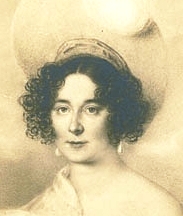
Therese Malfatti
Picture courtesy of Google Images

Like I've said before, I hate it when people get mixed up about my songs. This piece's actual title is Fur Therese, referring to Therese Malfatti, who I had once wanted to marry and who I had dedicated this piece to. She was my student and close confidant. I'd proposed to her in the year 1810 with this song in my head, however, she turned me down and married another. Therefore, I did not publish this piece during my lifetime.


Tuesday, October 12, 2010

End Period: 1810-1820

Ludwig van Beethoven in 1804, by Willibrord Joseph Mahler 
Portrait courtesy of Wikipedia

27 January, 1821

This past decade has been filled with love and sadness. Although I have loved, I have also lost. In the year of 1812, at the recommendation of my doctor, I traveled to Teplitz for hydrotherapy and to rest and recuperate. It was then that I wrote my letters to my beloved immortal. I shall not mention her name here, although in my mind, she is the most beautiful woman I have ever seen. Her mere face sends compositions rushing through my head, and the sound of her voice is like the music I aim to compose. I've written many letters to her, many of which I've burned, many of which I've kept in secret, and none of which I have sent. One of my hidden letters contain my words: "My angel, my all, my very self - a few words only today, and in pencil. Why such profound sorrow when necessity speaks? Can our love endure but through sacrifice - but through not demanding all - canst thou alter it that thou art not wholly mine, and I not wholly thine?" Yet, my beloved immortal would never read this letter, for I would never send it.

Mystery woman whose portrait was found inside Beethoven's secret drawer
Immortal Beloved?
Picture courtesy of lvbeethoven.com

Besides issues with my love life, Teplitz was also a place where I became notorious. Also in the year of 1812, my friend Goethe and I were walking around in a park behind the puny castle of Teplitz. It was there that Goethe spotted the Empress of Austria and her retinue walking just as we had been. Rushing over there like an idiot, he gave a deep bow to the Empress, and insisted I did the same. As if! I, the great Beethoven, bow to an Empress? Heavens, of course not! I was born so kings and queens could bow down to me! And not I to them! Of course, I intentionally strode right past her with my hat firmly placed upon my head and my arms tightly crossed over my chest. My friend Goethe was horrified, and he broke off our friendship at that incident. Who cares? I don't need any friends. There are hundreds of over people begging to be friends with me, and tens of other nobles waiting in line to bow down to me.

The Incident of Teplitz by Carl Rohling
Picture courtesy of madaboutbeethoven.com

Besides the few occurings in 1812, there were also a few accomplishments I made in the year of 1814. When the Congress of Vienna met, all the heads of state gathered together to determine the fate of Europe after Napoleon's dictatorship. Thus, I was invited to play at their court many times, earning the fame and admiration of many political leaders of my time. I was a happy and proud man then.

In 1815, a series of unfortunate events occurred. First, my brother, Kaspar Karl died on November 15th. As if that wasn't bad enough, he wrote in his will that I and his widow would be joint-guardians of his then 9-year old son, Karl. This began my long and tiring battle for full custody of my nephew, since I believed his mother to be a fickle and irresponsible woman unfit to care for my brother's son. I despised that ugly and immoral Johanna! I was serious in raising the boy right, and I was most certain she did not possess the same attitude I did when regarding the boy's future. It was during this period of time that I stopped composing for a short while. During my hiatus, I frequently fell ill due to the strain I was put under while fighting for sole guardianship of my nephew. Only five years later would I finally win my lawsuit to become Karl's sole guardian.

I must attend to my nephew now, for it would be irresponsible of me to spend so much of my time fighting for custody of the boy and not spend my time caring for him to make sure his future is a successful one. Goodnight.


Sincerely,

Friday, October 1, 2010

Favorite Sonatas and Symphony No. 9

SONATE
Tempest Sonata
d-minor, Op. 31, No. 2
Countess Anne Margarete von Browne gewidmet
Komponiert 1802


1st Movement:
http://www.youtube.com/watch?v=r3N58G9DRaA


2nd Movement:
http://www.youtube.com/watch?v=UeT5etiaJOI&feature=related


3rd Movement:
http://www.youtube.com/watch?v=wyGPclYqk7I&feature=related


SONATE
Appassionata Sonata
Count Franz Brunswick gewidmet
f-minor, Op. 57, No. 23
Komponiert 1804 - 1805


1st Movement:
http://www.youtube.com/watch?v=xlcVu8SLDdo&feature=channel


2nd Movement:
http://www.youtube.com/watch?v=8gdUWdDVriI&feature=channel


3rd Movement:
http://www.youtube.com/watch?v=4o3eiEHmJUA&feature=channel


SINFONIE
Frederich Wilhelm III of Prussia gewidmet
d-minor, Op. 125, No. 9
Komponiert 1822-1824


Monday, September 27, 2010

Last Years: 1820-1827

Ludwig van Beethoven in 1815, by Willibrord Joseph Mahler
Portrait courtesy of timelines.com

4, December 1827

Nothing much has happened in these past few years. I finished my ninth symphony in 1823. Also, in that same year, I met a sharp and bright young lad, who I feel will have the makings of a great musician later on. Franz Liszt, a young Hungarian lad, was only 11 years old when I came to his concert to see him perform on April 13th. Oh what a great player the boy was! If only my nephew, Karl, had the same talent his boy possessed.

Unfortunately, my  nephew is somewhat of a dunce . . . no, scratch that. My nephew is a complete idiot when it comes to the appreciation of the finer qualities of music! He could not tell a C note from an A, while I his uncle, who shares his blood, who is the greatest composer on Earth, who cannot hear, can tell the difference between all the notes on the piano! Oh, I should not work myself up, for the doctor has told me to keep my blood pressure down, else it will imped my other illnessses that have plagued my life.

Anyways, after Liszt's performance, I went over to the boy and congratulated him heartily, so impressed was I by him. Perhaps he will be my successor in this musical world, a boy worthy of receiving my blessing, will undoubtedly heap loads of musical talent on this world long after I am gone.

On the 7th of May in 1824, my ninth symphony was first performed at the Karntnertor Theatre. I insisted on conducting at this symphony, for I knew my years on this world were almost over, and I would probably not live to see the next decade. Of course, I was conducting completely off beat due to my deafness, and I did not know that the real conductor was sitting a little off to the side and the players were actually looking to him when looking for conducting instructions. Only months later when one of my audience members had told me about that other conductor had I known.

This "other conductor" business was not the only thing I had not known. When my ninth symphony's performance was over, I could not hear the applause. Heck, I didn't even know that my own piece was over! In fact, until ony of my soloists turned me around to face the audience to see the thunderous applause and standing ovation they gave to my composition that I wept.

However, this happiness wasn't to last. In the year of 1826, my nephew attempted suicide! WHAT AN IDIOT MY NEPHEW IS. If he had truly wanted to commit suicide, he might as well do it properly! Remember, I said "attempted suicide!" My nephew attemped, and he failed! Oh, how am I related by blood to this young idiot? Apparently, he had two pistols and a heap of gunpowder at his disposal. Yet, he failed to shoot himself in the head? HOW? I know he is not a very bright young lad, but he does have an awfully huge and empty head! I have no idea how he managed to MISS shooting himself in the head. Anyways, he missed both times he tried to shoot himself. The second bullet grazed his temple but that was it. I really do sometimes wonder whether this boy was switched at the hospital, for I myself am quite an intelligent man. Therefore, there must be no way that this genius (me) is related to this suicide-committing-idiot (Karl).

After Karl's failed attempted suicide, my other younger brother, Johann (not Karl's father who had already passed away) invited the both of us to visit him at his house in Gneixendorf to get away from the atmosphere in Vienna. At first, I declined. But Johann persistently repeated his invitation, and nagged through his letters he sent weekly. After my nephew recovered from his attempted suicide in the hospital, I accepted my brother's invitation, and when I arrived there, my brother gave me my own servant! This brother certainly knows how to treat me! Or at least that's what I thought at the time. How wrong I was! Throughout my stay at Johann's apartment, Johann continued to pick fights with me. He questioned my stay at his apartment with issues over whether I should pay rent. Johann had invited ME to stay with HIM. I would certainly not prefer to be here if he himself had not asked me! And now he's asking me to pay rent to stay in a place I didn't like? Of course I refused! Besides, that, Johann frequently argued with me over Karl's inheritance. Although I do think the boy is an idiot, I still love him! He is my nephew after all! I am a relatively rich composer, although I do not spend my money like a rich composer because I am always putting some money aside for Karl. And Johann questions my noble act of doing this! How rude of him!

Beethoven's room in Gneixendorf
Photo courtesy of madaboutbeethoven.com

Alternate view of Beethoven's room in Gneixendorf
Photo courtesy of madaboutbeethoven.com

All this stress from arguing with my idiotic brother added to my weak health. In these past few years, my stomach and ankles began to swell, and I had to wear a belt around my stomach to hold it in. I finished my Late Quartet Op. 130 in my stay at Gneixendorf.

It was only a few days ago that my brother and I had a horrible and terrible row where I demanded to leave the hell that is Gneixendorf with Karl, despite the fact that the open milk cart was the only transportation available. Nevertheless, my pride exceeded me, and Karl and I left that very day for Vienna which took two days to complete. I am now a very sick man, for traveling for two days in the biting frost of December was too much for me to bear.

I shall leave my entry here. For I need to soak in a hot bath to ease the terrible aching of my bones.

Sincerely,


Thursday, September 16, 2010

The End: Ende

SONATE
SONATA QUASI UNA FANTASIA
Der Grafin Giulietta Guicciardi gewidmet
Komponiert 1801
c#-minor, Op. 27, No. 2: Adagio sostenuto


26 March, 1827

Ludwig van Beethoven, 1823 by Ferdinand Georg Waldmuller
Portrait courtesy of netfiles.uiuc.edu

I am near the end. I am sure of it. I know I am not long for this world. For now, I am laying on my deathbed with my closest friends at my side. Soon, my soul will be carried to heaven, and my body will be buried by my people. At the very least, although I know I am deaf, I can hear my Moonlight Sonata, dedicated to my once beloved Countess Guiletta Guiciardi. I can hear the music guiding my soul to God, and I know "I shall hear again in heaven." One of my closest friends, Anselm Huttenbrenner, and my sister-in-law are with me by my side as my play comes to a close. "Applaud, my friends, the comedy is over."

Farewell for the last time,


Beethoven's Room in 1827 by Johann Nepomuk Hoechle
Picture courtesy of brightcecilia.net


Anselm Huttenbrenner:
I am a close friend of the recently deceased Beethoven. I was with him by his bedside as the great composer passed away. In a few moments, Beethoven's soul will be guided to heaven. Alas, he was not even able to enjoy the crate of wine his publisher sent him. Only his last words, "Oh, pity, pity --- too late!", show how Beethoven was not ready to leave the world just yet. I did not wish to forget my friend in a hurry, so as he died, I wrote what I saw to commit to memory this sad day and to let others who loved Beethoven read of how he left this world. It seemed as if the world itself was angry that Ludwig van Beethoven was no longer alive on this fateful day, for the heavens were filled with thick, angry gray clouds, and lightning and thunder were seen and heard throughout the day.

At 5:45 p.m., the worst happened.

"At this startling, awful peal of thunder,
the dying man suddenly raised his head from [my] arm,
stretched out his own right arm majestically—like a general giving orders to an army. This was but for an instant;
the arm sunk back;
he fell back;
Beethoven was dead."

"Beethoven's eyes opened and he lifted his right fist for
several seconds, a serious, threatening expression on
his face. When his head fell back, he half closed his eyes
... Not another word, not another heartbeat." - Huttenbrenner
 

Wednesday, September 15, 2010

Epilogue: Epilog

27 March, 1827

Beethoven's funeral as depicted by Franz Stober
Picture courtesy of timelines.com

Franz Schubert:


I am a friend of Beethoven. One who is suffering with the most terrible grief that my dearest friend is dead. Yet, I live to tell of Beethoven's funeral procession, so his people may read of how famous and great this composer was.

I was one of the torchbearers in Ludwig's funeral, along with Carl Czerny, Franz Gillparzer, and Johann Nepomuk Hummel. This morning, Beethoven's body was placed in the Wahring cemetery, northwest of Vienna. As his friends lay his body in the coffin, a wreath of white roses was placed upon Beethoven's head, and a wax-cross and a lily were placed in his hands. His very own Funeral March was played upon his wishes at his funeral.

Tens of thousands of citizens arrived to attend the funeral procession. It is said that there were around 30,000 witnesses to Beethoven's burial! Vienna itself mourned Beethoven's death, as theaters were closed, and many nobles attended the funeral as well to pay their last respects to the greatest Classical composer of all time.

This is all I have to say, for now, I must properly pay my respects to my most esteemed colleague.

Farewell, to all who loved Beethoven.


Funeral March
http://www.youtube.com/watch?v=vmm2k4fRUO4


http://www.youtube.com/watch?v=YAAzRhj4x1E&feature=related


Ludwig van Beethoven's final resting site in Vienna
Picture courtesy of timelines.com